
Covered vs. Uncovered Deck Design in Southern Ontario (London & Kitchener): What to Choose
If you’re planning a new deck in Southern Ontario, one of the first (and biggest) decisions is whether your deck design should be covered or uncovered. Both options can look incredible, add usable outdoor living space, and boost home value; but they perform differently in our climate.
Below is a practical guide to help homeowners and builders in London, Kitchener, and surrounding Southern Ontario choose the right approach, with deck design ideas you can take straight into planning.
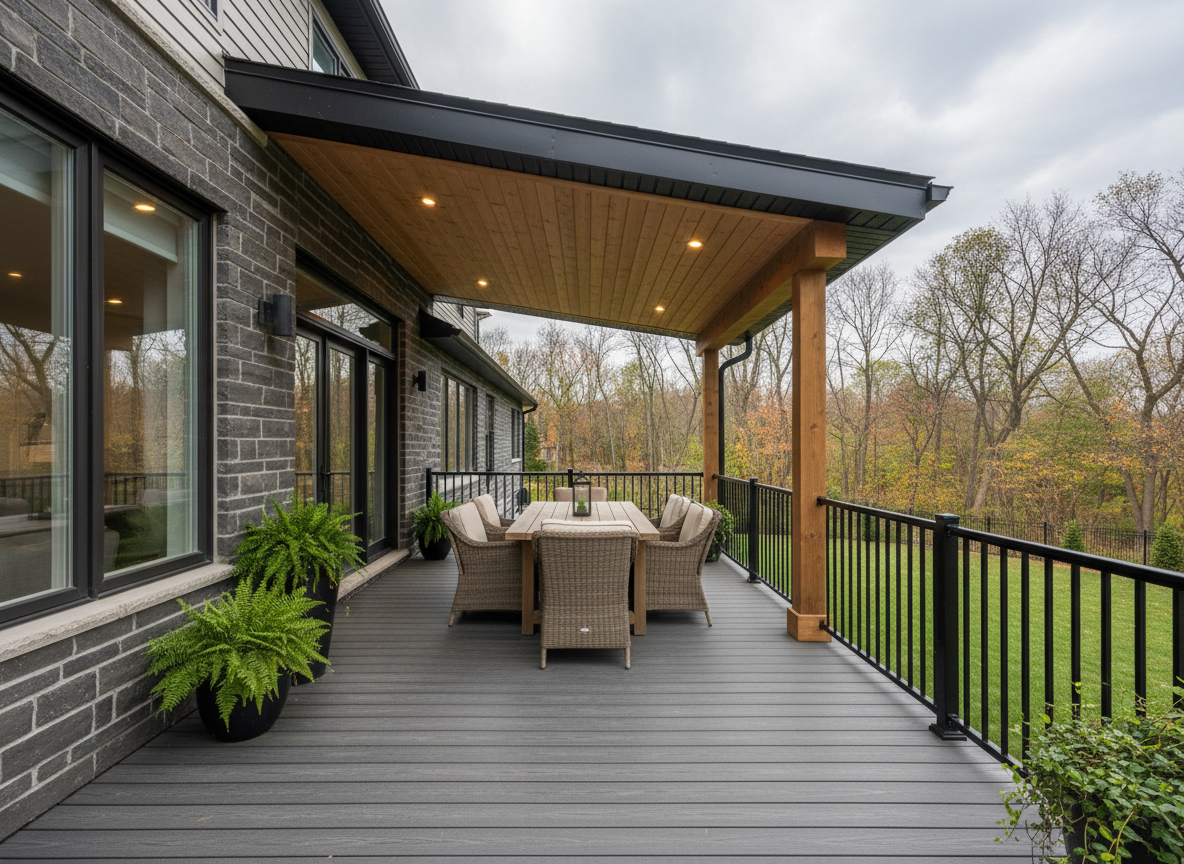
Quick comparison: covered vs. uncovered deck design
Covered deck design is best when you want:
More days of use (shade + rain protection)
A defined outdoor “room” feel
Better protection for furniture and finishes
Uncovered deck design is best when you want:
Maximum sunlight
Lower upfront cost and simpler construction
An open, backyard-first look
Covered deck design: pros, cons, and best uses
A covered deck (sometimes called a roofed deck) adds a structure above the deck surface—anything from a simple lean-to roof to a full extension of the home’s roofline.
Benefits of a covered deck in Southern Ontario
More usable seasons: With rain protection and shade, a covered deck design can be comfortable from early spring through late fall.
Better protection for materials: Deck boards, railings, and outdoor furniture can last longer when they’re not constantly exposed to sun and precipitation.
Comfort and function: A covered deck is ideal for outdoor dining, grilling areas, and entertaining—especially when weather changes quickly.
Lighting and fans: A roof makes it easier to add pot lights, ceiling fans, heaters, and speakers for a true outdoor living space.
Considerations for covered deck design
Cost and complexity: A roof structure typically increases cost and requires more planning.
Light inside the home: Depending on placement, a covered deck can reduce natural light through nearby windows.
Drainage and snow load: In Southern Ontario, your roof design needs proper slope, drainage, and structural support for winter conditions.
Covered deck design ideas
Gable roof for a classic look and better headroom
Shed roof for a clean, modern profile
Partial cover (only over dining or seating zone) to balance sun and shelter
Skylights or translucent panels to keep the space bright
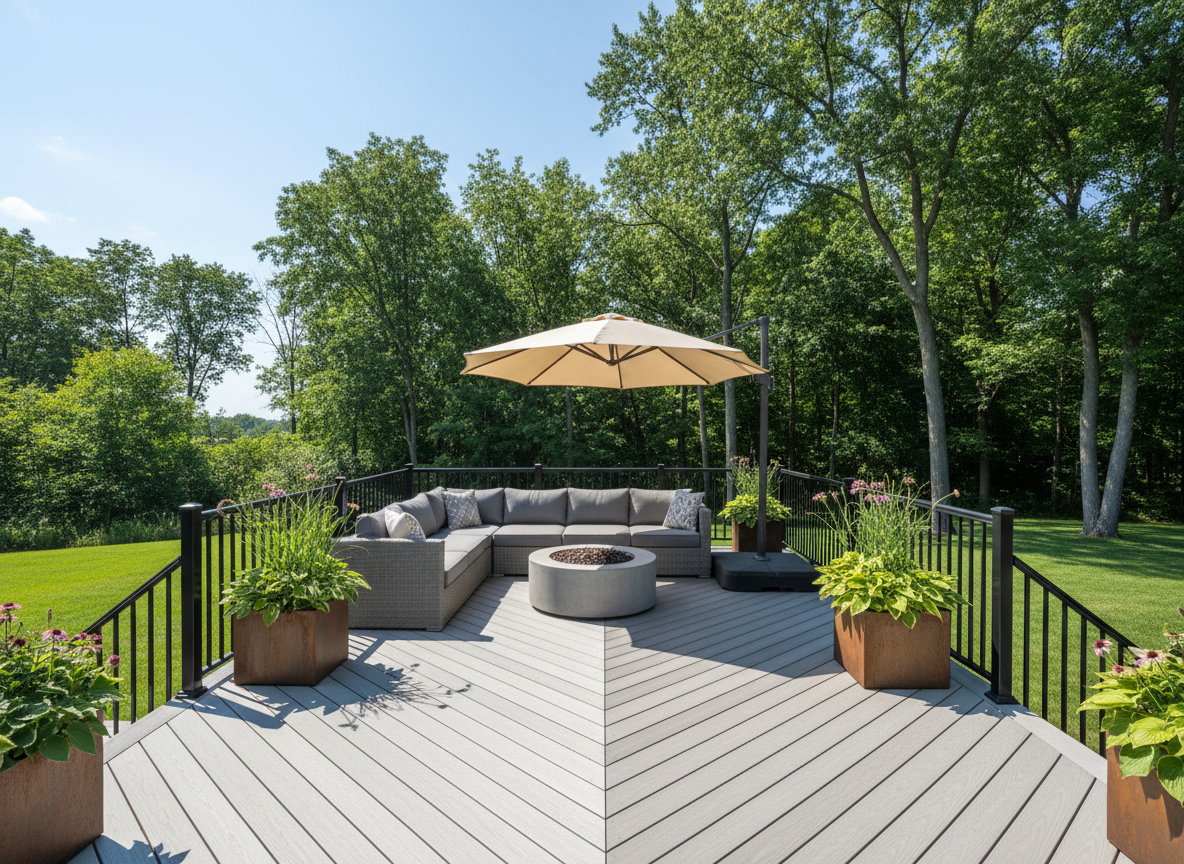
Uncovered deck design: pros, cons, and best uses
An uncovered deck is the classic open-air deck; the design is simple, flexible, and great for sun exposure.
Benefits of an uncovered deck in Southern Ontario
Lower upfront cost: Fewer structural components means a more budget-friendly deck build.
More sunlight: If you want a bright backyard and sun-friendly outdoor living, uncovered deck design is hard to beat.
Design flexibility: It’s easier to expand later, add pergolas, or create multi-level layouts.
Cleaner sightlines: An uncovered deck keeps your yard views open and can make smaller backyards feel larger.
Considerations for uncovered deck design
Weather exposure: Rain, UV, and freeze-thaw cycles can wear finishes faster.
Furniture and maintenance: You may need more frequent staining/sealing and better storage solutions.
Comfort: On hot summer days, direct sun can make the deck surface and seating uncomfortable.
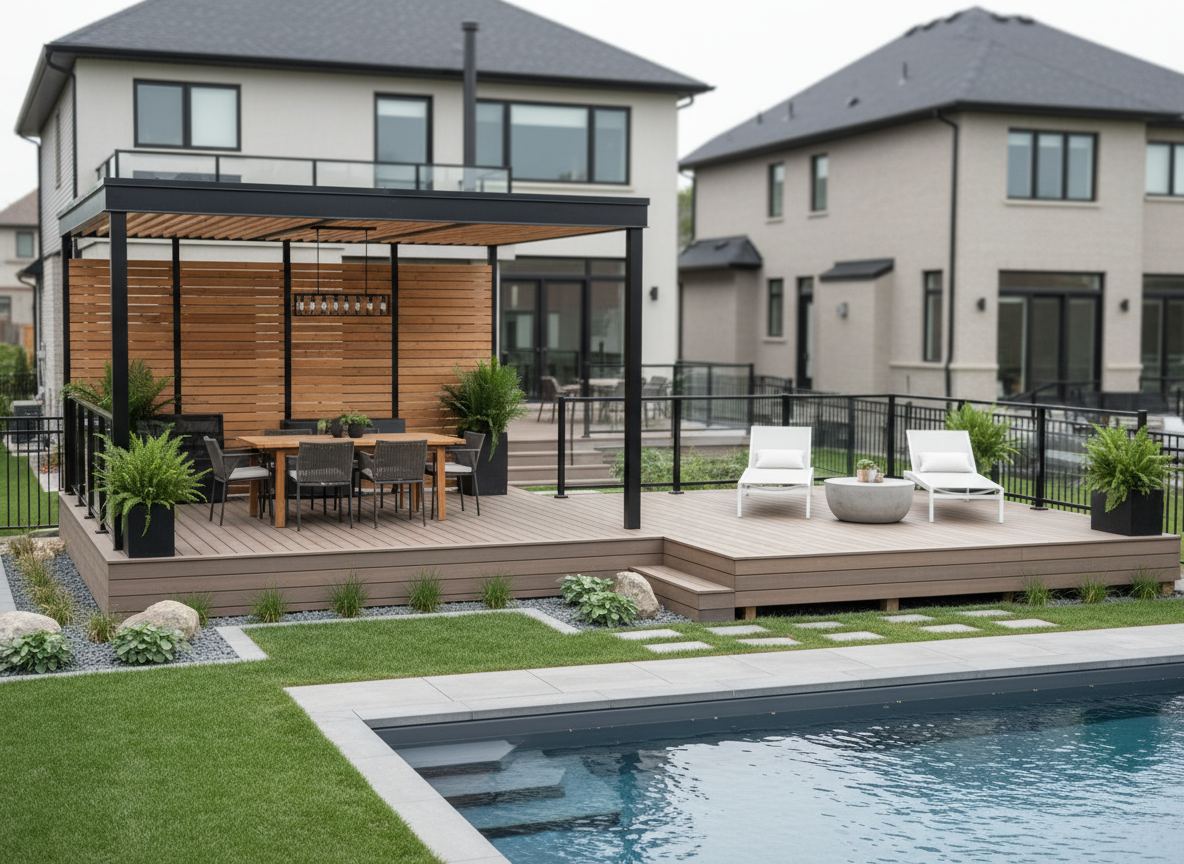
Uncovered deck design ideas
Pergola (open slats) for partial shade without a full roof
Shade sail for a modern, cost-effective solution
Built-in planters to define zones and add privacy
Multi-level deck design to separate dining, lounging, and hot tub areas
What works best in London and Kitchener?
In London and Kitchener, homeowners often want a deck design that handles:
Quick weather shifts (sun to rain in the same afternoon)
Hot summer sun
Snow and ice in winter
That’s why many Southern Ontario projects land on a hybrid deck design:
A covered section for dining and entertaining
An uncovered section for sun, plants, and open-air lounging
This approach gives you the best of both worlds without committing the entire footprint to one style.
Deck design planning tips (before you build)
Map your sun and shade: Note where the sun hits in the morning, midday, and evening.
Decide how you’ll use the space: Dining, grilling, lounging, hot tub, or all of the above.
Think about privacy: Railings, screens, and landscaping can change how “usable” the deck feels.
Choose materials for the exposure level: Covered decks and uncovered decks can use different finishes and board types depending on sun and moisture.
Confirm permit requirements early: Depending on height, attachment, and roof structures, your deck design may require approvals.
Final thoughts: choosing the right deck design
A great deck design isn’t just about looks—it’s about how the space performs in real life.
Choose a covered deck design if you want maximum comfort, more usable days, and a true outdoor room.
Choose an uncovered deck design if you want sun, simplicity, and a classic open-air backyard feel.
Consider a hybrid deck design if you want the most flexibility for Southern Ontario weather.